The first week home after a trip
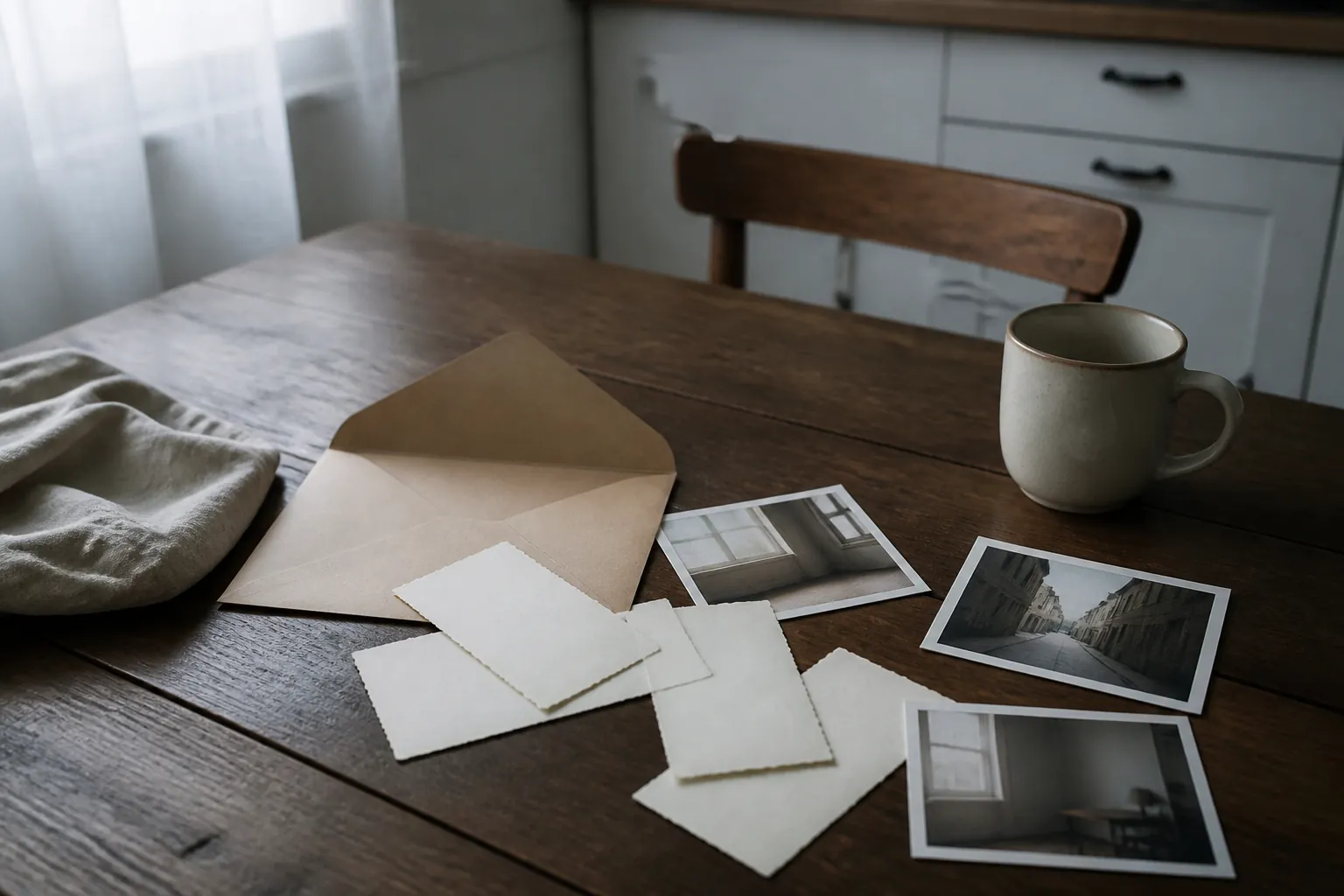
The bag on the floor looks like the end of the journey. It is not. The first seven days at home decide whether your notes stay readable or become another unlabeled stack beside the laundry. This sequence is small on purpose: empty the envelope, sit pictures next to words, and reread once while the weather of the trip is still in your body.
Why the week after arrival matters more than the last night away
On the road, even a thin habit can hold. You are still inside the days. At home, mail, work, and sleep debt arrive together. The envelope stays closed because opening it feels like one more task. Photographs stay on a card because sorting them feels like a project. A month later the week has fused into a few bright scenes and a long blur, and the scraps that could have separated the days are still in the same pocket.
The return week is not a second diary. It is a short finishing pass: enough structure that the record you already made becomes usable, and not so much structure that you abandon it on day two. Treat those seven days as still part of the trip, even if you are back at your own table.
What to do in order
Order matters more than polish. If you start by editing photographs, the envelope waits. If you start by rewriting notes into essays, nothing else happens. Use this sequence and stop when the block of time you set is over.
- Empty the envelope onto one clear surface. Do not label yet. Just see what you actually carried.
- Place each scrap beside the note or voice memo that belongs to the same day. Gaps are useful; they show where memory already started to glue days together.
- Pull a small set of photographs for those same days only. Ignore the rest of the card until later.
- Write one sentence under each day that a camera could not take: a remark, a smell, a reason you chose a bench.
- Reread the week once, aloud if you can. Then close the folder. Do not plan the next route in the same sitting.
The return week fails when it tries to become a second trip. Keep it shorter than unpacking, and finish it before the mail wins the table.
What belongs on the table, and what can wait
People often bring too much into the first sitting. A full gallery, a map redraw, a typed transcript of every voice memo: that is how the week collapses into guilt. Bring only what separates days. Leave the rest labeled “later” in a single place.
- Bring: ticket stubs, lodging cards, map corners, the evening notes, one photo set per day.
- Leave: unused frames, receipts with no story, drafts you meant to “finish properly.”
- Protect: one hour on two separate evenings is better than a heroic Sunday that never happens.
If you travel with children, share the table. One adult empties the envelope while another keeps the room calm. A child can place tickets in date order without writing a word. The goal is a finished sequence, not a private literary hour.
How to reread without turning it into nostalgia as a product
Rereading is practical. You are checking whether the days still separate, and noting what you would pack differently next time: more paper, less paper, a voice memo on walking days, an earlier evening note. You are not polishing a story for an audience. If a sentence embarrasses you, leave it. Awkward lines often reopen a day better than cleaned ones.
After the single reread, put the envelope somewhere you will find it before the next departure. Do not file it so carefully that it disappears. The next route should be built from what you actually liked, not from a list of famous stops you never wrote about.
When the week slips
Sometimes work returns harder than expected. If three days pass with the bag still closed, shrink the plan. One evening: empty the envelope and write dates on the scraps. Second evening: pair three photographs with three notes. Skip the full reread until a free hour appears. A partial finish still beats a perfect plan that never starts.
Places change between visits, and so do households. The method assumes a table and a quiet hour. If you do not have those, use the floor, a tray, or a hotel desk on a layover home. The surface is not the point. The point is finishing the record while the days can still be told apart.
If you want help designing a return week before you leave, write to us through the contact page. Bring the shape of your evenings at home, not a fantasy of free time you do not have. The plan has to fit the life you return to.